


Dubai
English
Request a call









Raw Material
USA

Purity
99%

Country of Origin
UAE
Indications


Muscle, tendon, and ligament injuries
Delayed tissue healing
Recovery after intense physical activity
Joint and connective tissue stress
Reduced mobility and tissue stiffness
Sports recovery and rehabilitation
Contraindications

Pregnancy and breastfeeding
Oncological diseases
Acute infectious diseases
Active autoimmune disorders
Individual intolerance to components
Age under 18
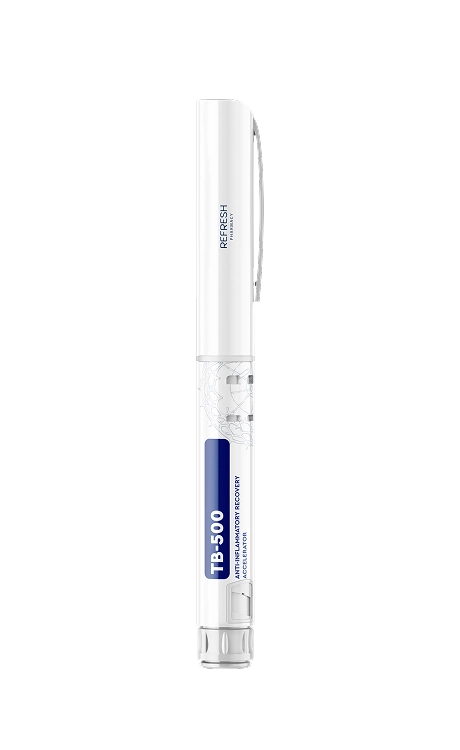
TB-500 Pen is a regenerative peptide format based on a synthetic fragment of thymosin β4, a molecule responsible for cell migration, tissue repair, and extracellular matrix remodeling. TB-500 accelerates healing, enhances microcir...
TB-500 Pen is a regenerative peptide format based on a synthetic fragment of thymosin β4, a molecule responsible for cell migration, tissue repair, and extracellular matrix remodeling. TB-500 accelerates healing, enhances microcirculation, reduces local inflammation, and improves the elasticity and resilience of connective tissues. Owing to its high stability and bioavailability, the peptide amplifies recovery processes after stress, training, and micro-injuries.
TB-500 activates pathways involved in cell migration and angiogenesis, promoting faster tissue organization and helping maintain the functional integrity of muscles, ligaments, tendons, and fascia. Studies indicate that TB-500 may accelerate recovery by 25–40%, improving mobility and reducing the risk of recurrent injury.
The pen format ensures controlled pharmacokinetics, sterile administration, and convenience for long-term sports and rehabilitation protocols.
• enhances microcirculation and stimulates angiogenesis
• reduces inflammation and speeds up healing of micro-injuries
• supports the recovery of muscles, fascia, tendons, and ligaments
• improves flexibility and functional mobility
• reduces the likelihood of reinjury under high physical load
• ideal for high-intensity training cycles and heavy physical demand
• improves connective-tissue quality and accelerates recovery
• non-hormonal, physiologically adaptive safety profile
• suitable for long-term recovery programs and sports rehabilitation
TB-500 Pen is designed for athletes, active individuals, and anyone aiming to shorten recovery time, enhance mobility, and strengthen connective-tissue resilience. It is used in protocols for load adaptation, injury recovery, and structural support of the musculoskeletal system.
TB-500 activates pathways involved in cell migration and angiogenesis, promoting faster tissue organization and helping maintain the functional integrity of muscles, ligaments, tendons, and fascia. Studies indicate that TB-500 may accelerate recovery by 25–40%, improving mobility and reducing the risk of recurrent injury.
The pen format ensures controlled pharmacokinetics, sterile administration, and convenience for long-term sports and rehabilitation protocols.
TB-500 Properties & Effects
• accelerates cell migration and tissue remodeling• enhances microcirculation and stimulates angiogenesis
• reduces inflammation and speeds up healing of micro-injuries
• supports the recovery of muscles, fascia, tendons, and ligaments
• improves flexibility and functional mobility
• reduces the likelihood of reinjury under high physical load
Why Choose TB-500
• powerful regenerative action due to thymosin β4 activity• ideal for high-intensity training cycles and heavy physical demand
• improves connective-tissue quality and accelerates recovery
• non-hormonal, physiologically adaptive safety profile
• suitable for long-term recovery programs and sports rehabilitation
TB-500 Pen is designed for athletes, active individuals, and anyone aiming to shorten recovery time, enhance mobility, and strengthen connective-tissue resilience. It is used in protocols for load adaptation, injury recovery, and structural support of the musculoskeletal system.
Smart Benefits.
Maximum Impact.
Special Offers








The Science of Longevity in Detail





You may also like

Fill out the form to book your consultation.
Your personal manager will contact you within 10 minutes and arrange a convenient time for your visit.