


Dubai
English
Request a call













Osteoarthritis has long been perceived as an inevitable consequence of age or joint wear and tear. Today, this view is changing: increasing attention is being paid to the biochemical processes inside cartilage tissue and how they can be influenced. It is in this context that AOD 9604 is being mentioned more and more often — a peptide that was originally studied in a completely different field but unexpectedly showed interesting effects for joints.
What does AOD 9604 do and why it is studied in osteoarthritis
AOD-9604 is a fragment of growth hormone that lacks its systemic action. Because of this, it is considered a safer molecule for targeted effects on tissues. In experimental models, researchers became interested in its ability to influence inflammatory reactions and cartilage metabolism. This is not about restoring a joint “at the snap of a finger,” but about influencing the environment in which degeneration develops. That is why AOD-9604 has come into focus in laboratory and preclinical studies.
Peptide AOD 9604 and mechanisms of action in the joint
When studies discuss what AOD-9604 is used for, the emphasis is almost always on its effect on cellular metabolism within joint tissues. Peptide AOD 9604 is viewed as a signaling molecule that intervenes not in symptoms, but in the biochemical processes accompanying cartilage degeneration. Experimental data show that the peptide can reduce the activity of pro-inflammatory mediators that accelerate the destruction of articular cartilage. At the same time, it affects the metabolism of chondrocytes — the cells responsible for maintaining the structure and elasticity of cartilage tissue. As a result, a more stable balance is formed between processes of breakdown and renewal. Particular attention should be paid to the effect of Peptide AOD 9604 on signaling pathways associated with cartilage matrix degradation. In osteoarthritis models, a decrease in the activity of enzymes that break down collagen and proteoglycans has been observed. This is critical, since accelerated matrix degradation underlies disease progression. In osteoarthritis, inflammation and destruction reinforce each other, forming a vicious cycle of pain, stiffness, and limited mobility. The potential value of AOD-9604 lies in the fact that it affects several links in this process at once, without stimulating aggressive tissue growth and without interfering with hormonal regulation. It is precisely this mechanism that is now considered one of the promising directions in the study of joint degeneration.
AOD 9604 Peptide: what experiments show
Preclinical data on AOD-9604 look cautiously encouraging. In experimental models, AOD-9604 peptide demonstrated a reduction in the expression of inflammatory markers directly involved in the destruction of articular cartilage. In parallel, a slowing of catabolic processes in cartilage tissue was noted — primarily those associated with the breakdown of collagen and proteoglycans. The key point here is that this is not about “treatment” in the classical sense. The experiments consider AOD-9604 as a way to influence the early links of the pathological process: to reduce the inflammatory background and create conditions under which tissue degradation proceeds more slowly. This approach is especially important at early stages, when changes are still reversible or, at least, manageable. Advantages of AOD 9604 dubai most often emphasized in scientific publications:- absence of systemic hormonal effects, which reduces the risk of side effects;
- targeted impact on joint tissue metabolism without stimulating uncontrolled growth;
- potential reduction of local inflammation that sustains the pain syndrome.

AOD 9604 benefits and limitations
When discussing the mechanism of action, researchers emphasize that AOD-9604 is valued precisely for its regulatory effect. It does not trigger uncontrolled tissue growth and does not directly interfere with the hormonal system, but works through intracellular processes related to metabolism and inflammatory reactions. This approach is particularly important in chronic degenerative joint changes. Its strengths include targeted action without systemic burden on the body. The peptide helps maintain a balance between tissue breakdown and repair without provoking aggressive regenerative mechanisms, which makes it an interesting direction for further study in joint pathology. At the same time, limitations remain obvious: clinical data are still insufficient, most conclusions are based on experimental models, and questions of long-term safety, application protocols, and effectiveness at later stages of degeneration require additional research.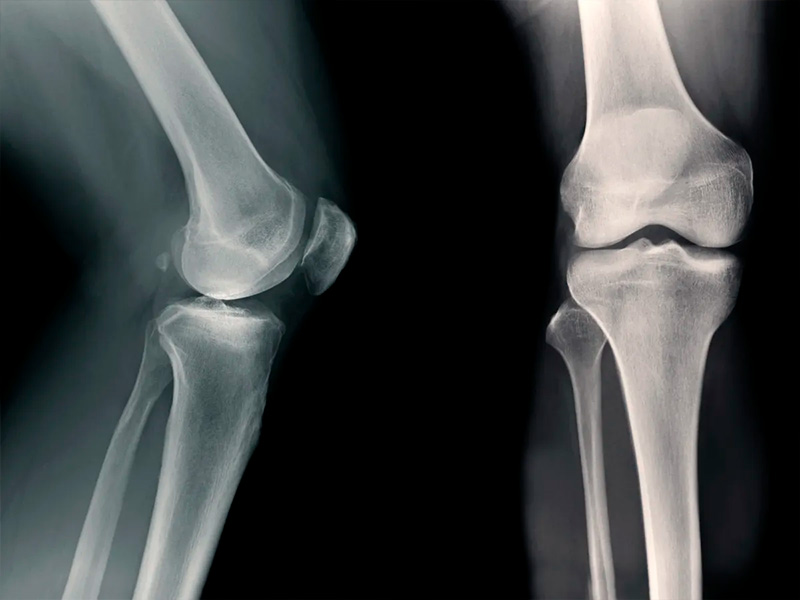
AOD -9604 peptide: who this direction is relevant for
Most often, studies are focused on people with early stages of degenerative changes. If we answer the question of who such approaches are considered for, first and foremost these are patients for whom it is important to slow progression rather than simply eliminate symptoms. In practice, interest in this direction most often arises in the following situations:- Early forms of osteoarthritis, when pronounced joint deformation is not yet present.
- Cases where standard treatment produces weak or unstable results.
- The need for a gentler, more sparing impact on joint tissues.
At the intersection of research and practice
Today, it is more accurate to speak not of a ready-made solution, but of a scientific direction. A product based on AOD-9604 is a prospect that requires clinical trials and strict application protocols. Nevertheless, interest in it shows how the approach to treating degenerative joint diseases is changing. If this approach seems interesting to you and you want to understand how appropriate it is specifically for you, it is worth scheduling a consultation with us. We will review your situation in detail, discuss possible options, and select an optimal strategy based on your condition and goals.
Fill out the form to book your consultation.
Your personal manager will contact you within 10 minutes and arrange a convenient time for your visit.