















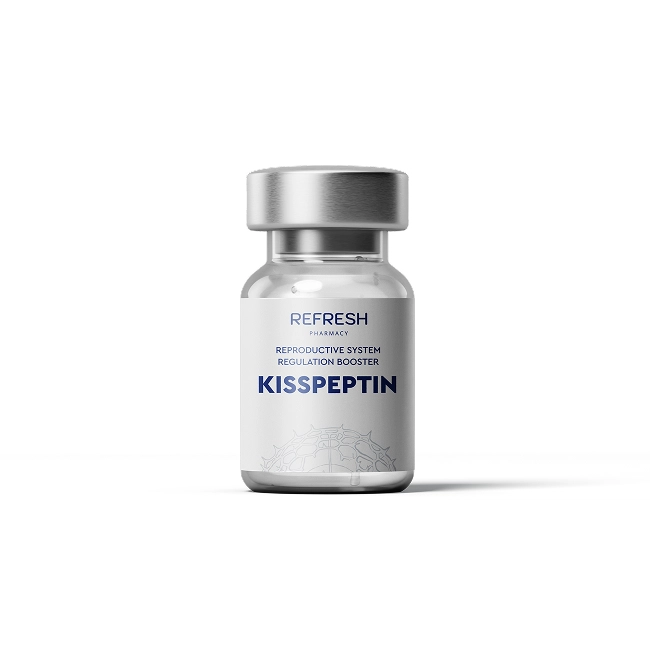

By directly influencing neuroendocrine pathways, Kisspeptin is used in protocols for hormonal optimization, sexual wellbeing, cycle regulation, reproductive support, and improvement of intimate health. Clinical observations indicate enhanced hormonal sensitivity and restoration of GnRH rhythmicity in 60–70% of patients during structured courses.
Key Properties & Effects of Kisspeptin
• activates KISS1R receptors and stimulates GnRH secretion• supports hormonal balance and healthy reproductive axis function
• enhances libido and sexual motivation
• improves fertility signaling and hormonal responsiveness
• reduces emotional fluctuations associated with hormonal instability
• promotes energy, vitality, and overall wellbeing
Reasons to Сhoose Kisspeptin
• acts through central neuroendocrine mechanisms• effective for low libido, hormonal instability, and cycle irregularities
• gentle, physiological mechanism without stimulants
• suitable for long-term hormone-support protocols
• enhances the effectiveness of sexual-wellbeing, anti-stress, and cycle-restoration programs
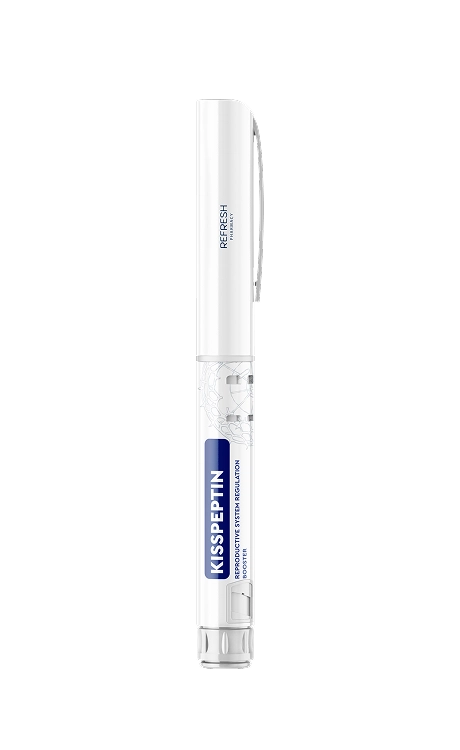
This format
is designed for precision, convenience, and modern peptide-based wellness
protocols. It is often discussed in the context of fertility support, hormonal
optimization, libido, cycle support, and reproductive recovery.
Main Benefits
- Supports
healthy reproductive signaling.
- Helps regulate GnRH pathway
activity.
- May support fertility-related
protocols.
- May support libido and hormonal
responsiveness.
- Fits into individualized
women’s and men’s wellness plans.
- Offers a convenient peptide pen
format for precise use.
Suggested
Use
Kisspeptin
protocols are highly individualized and depend on the goal, sex, cycle phase,
and overall hormonal status. In clinical and research settings, kisspeptin is
commonly used in short, targeted protocols rather than
continuous long-term use.
A common
practical approach is:
- Start with a low dose to
assess tolerance.
- Use it intermittently rather
than continuously.
- Adjust timing based on the
intended goal: fertility support, libido support, or endocrine signaling.
General
Dosing Guidance
Because
kisspeptin pens vary in concentration, the exact dose should always match the
product strength and clinical protocol. In many practical peptide settings,
kisspeptin is often discussed in the 100–500 mcg per use range,
though research protocols may differ significantly depending on indication and
administration route.
Stacking
Ideas
Kisspeptin
is often paired with peptides that support hormonal balance, recovery, and
endocrine signaling.
For women
- Epithalon for anti-aging and sleep
support.
- DSIP for stress and sleep
quality.
- NAD+ for energy and cellular
support.
- GHK-Cu for skin and tissue
recovery.
- PT-141 when libido support is
also a goal.
For men
- NAD+ for energy and
resilience.
- Epithalon for recovery and
longevity support.
- BPC-157 for
tissue recovery.
- TB-500 for
physical recovery.
- CJC-1295 / Ipamorelin in performance-oriented protocols where appropriate.
Information
Smart Benefits.
Maximum Impact.







The Science of Longevity in Detail