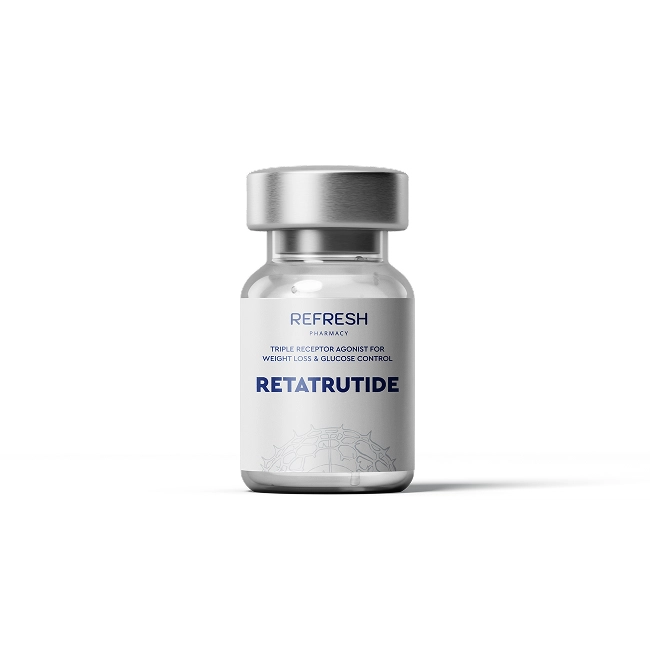




















Retatra is an experimental synthetic peptide with the code name LY3437943, developed by Eli Lilly. It belongs to a new generation of therapies being studied for obesity and metabolic disorders.
Retatrutide is a tr...
Retatra is an experimental synthetic peptide with the code name LY3437943, developed by Eli Lilly. It belongs to a new generation of therapies being studied for obesity and metabolic disorders.
Retatrutide is a triple receptor agonist that acts on:
-
GLP-1, or glucagon-like peptide-1;
-
GIP, or glucose-dependent insulinotropic polypeptide;
-
glucagon.
Important: as of September 2026, retatrutide remains an investigational drug and has not received standard FDA approval for routine prescribing. It is being evaluated in clinical trials, including the TRIUMPH program.
What Is It Being Studied For?
The main areas of research include:
-
treatment of obesity;
-
reduction of excess body weight;
-
improved blood glucose control in people with type 2 diabetes;
-
reduction of fat mass and waist circumference;
-
treatment of metabolic dysfunction-associated steatotic liver disease;
-
potential effects on cardiovascular and other obesity-related complications;
-
possible improvement of knee osteoarthritis symptoms by reducing body weight.
Retatrutide is not positioned as a cosmetic peptide for the skin or as a general “anti-aging” treatment. Its primary area of application is metabolic medicine and obesity treatment.
How Does It Work?
Retatrutide works by simultaneously stimulating three hormonal pathways.
GLP-1
Activation of GLP-1 receptors may:
-
reduce appetite;
-
increase feelings of fullness;
-
slow gastric emptying;
-
improve glucose-dependent insulin secretion;
-
reduce food cravings and the tendency to consume large portions.
GIP
GIP participates in the regulation of the insulin response after meals and may enhance the metabolic effects of GLP-1. It may also play a role in fat metabolism and insulin sensitivity.
-
increase energy expenditure;
-
stimulate fat mobilization;
-
enhance fatty-acid oxidation;
-
influence energy metabolism in the liver.
The concept behind the triple mechanism is to reduce food intake while increasing energy expenditure. This combination distinguishes retatrutide from medicines that act only on GLP-1 or on the GLP-1/GIP combination.
Potential Benefits
In phase 2 studies involving people with obesity, retatrutide produced substantial weight loss. At the highest dose studied, the average reduction in body weight reached approximately 24.2% after 48 weeks.
In later phase 3 reports, Eli Lilly announced an average body-weight reduction of 28.3% over 80 weeks, with approximately 45.3% of participants achieving at least 30% weight loss. These findings require evaluation in the full published study and should not be interpreted as a guaranteed result for every patient.
Potential benefits may include:
-
substantial weight loss;
-
reductions in visceral and total fat mass;
-
improved glycemic control;
-
reduced appetite;
-
a smaller waist circumference;
-
a possible reduction in pressure on the joints;
-
improvement in certain markers of metabolic health.
The results depend on the dose, treatment duration, diet, physical activity, and the patient’s baseline health. Clinical-trial results should not be directly extrapolated to unapproved products purchased online.
Dosing Protocols and “Stacks”
The term “stacks” may refer to retatrutide dosing protocols or combination regimens. It is not possible to safely recommend self-directed regimens because retatrutide is still under investigation.
Clinical trials have used once-weekly subcutaneous injections with gradual dose escalation. Slow titration is intended to reduce the risk of gastrointestinal reactions.
Retatrutide should not be combined independently with:
-
semaglutide;
-
tirzepatide;
-
other GLP-1 receptor agonists;
-
other weight-loss peptides or products;
-
stimulants or fat burners;
-
insulin or glucose-lowering medications without medical supervision.
Such combinations may increase the risk of adverse effects, dehydration, hypoglycemia, and other complications. Unapproved “research use only” retatrutide is not equivalent to a registered medicine: its sterility, dosage accuracy, stability, and authenticity may be uncertain.
Side Effects and Risks
The most common side effects reported in clinical studies involved the gastrointestinal system:
-
nausea;
-
vomiting;
-
diarrhea;
-
constipation;
-
reduced appetite;
-
abdominal discomfort or pain.
The risk generally increases as the dose is escalated. Dehydration, poor food tolerance, and loss of muscle mass may also occur if weight loss is too rapid or protein intake is inadequate.
The following symptoms require medical assessment:
-
severe or persistent abdominal pain;
-
repeated vomiting;
-
signs of dehydration;
-
pronounced weakness or dizziness;
-
symptoms of hypoglycemia;
-
signs of an allergic reaction;
-
upper abdominal pain accompanied by jaundice or fever.
Certain limitations and potential risks of retatrutide are still being investigated. Therefore, its safety profile cannot yet be considered fully established for long-term use, pregnancy, older adults, or people with serious medical conditions.
Who May Be a Candidate?
In the future, retatrutide may potentially be considered by a healthcare professional for adults with:
-
obesity;
-
overweight accompanied by weight-related health conditions;
-
impaired glucose metabolism;
-
type 2 diabetes;
-
metabolic dysfunction-associated steatotic liver disease;
-
a significant risk of obesity-related complications.
In clinical practice, the decision should depend not only on the desire to lose weight but also on body mass index, waist circumference, comorbidities, current medications, medical history, and examination results.
Who Should Not Use It Without Medical Supervision?
Before consulting a healthcare professional, retatrutide should not be used by:
-
pregnant or breastfeeding women;
-
children and adolescents, unless use is part of an approved clinical study;
-
people with a personal or family history of medullary thyroid carcinoma or MEN 2 syndrome;
-
patients with a history of pancreatitis;
-
people with severe gastrointestinal disorders;
-
patients with gallbladder, liver, or kidney disease;
-
people taking insulin or other glucose-lowering medications without medical supervision.
The specific contraindications will depend on the final prescribing information issued after approval.
Why Is Retatrutide So Popular?
Retatrutide’s popularity is associated with several factors:
-
it acts on three receptor systems simultaneously;
-
early studies showed substantial weight loss;
-
it is being compared with popular GLP-1 and GLP-1/GIP medications;
-
it is widely discussed in obesity medicine, longevity, and biohacking circles;
-
many people view it as a potential next-generation weight-management therapy.
“Retatrutide is an investigational triple agonist of the GLP-1, GIP, and glucagon receptors being studied for obesity and metabolic diseases. Early clinical trials have shown substantial weight loss, but the medication is not yet approved for routine use.
Information
Smart Benefits.
Maximum Impact.








The Science of Longevity in Detail